Yeah, i don’t want to imagine that either! However, without proper farming techniques this could be a real possibility. This is due to potential threats from viruses attacking the potatoes during growth. Like all living things, viruses become envious and try to take for themselves.

So, with thanksgiving around the corner. I would like to highlight the most common sweet potato virus, the sweet potato feathery mottle virus (spfmv). This unique little virus infects sweet potatoes all over the world. The yield could be affected by up to 100%. The tell tell sign is a purple, artistic motif that forms on the leaves and a “cork” like texture to form inside the potato.

Let’s start with a little history on the sweet potatoes. These delicious root vegetables can trace their history all the way back to 750 BCE in Peru. Sweet potatoes have been prominent throughout central and south america since their discovery. Sweet potatoes made the way to spain in the 15th century by Christopher Columbus. Interestingly enough the term “sweet potato” was not termed until the 1740’s. Currently sweet potatoes are one of the most important food crops. There are over 105 million metric tons grown each year globally with 95% grown in developing countries.
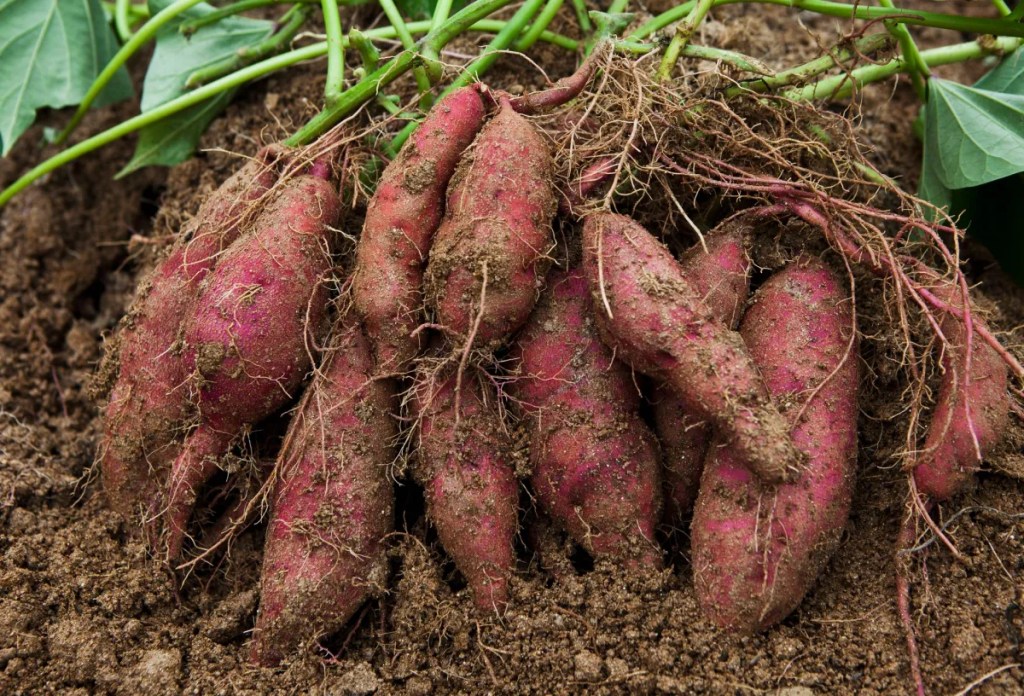
These vegetables are an amazing source of vitamins A, B, C, and E while also providing a source of iron and zinc. No part of the plant is left alone as the remains not used for human consumption is used for animal feed around the world. Sweet potatoes hold a high importance to developing countries as it is a cheap crop that provides much of the essential vitamins for life. Just 125g of fresh sweet potato from most orange varieties contain enough beta-carotene to provide the daily vitamin A needs of a preschooler.

Lets now do a little history on sweet potato feathery mottle virus (spfmv). This sweet potato virus can be classified as a potyvirus. Potyvirus are single strand positive RNA and belong to the largest plant virus genus which causes damage to a wide range of crops. This virus is transmitted by small aphid insects and have a range of symptoms depending on the infected host. SPFMV symptoms include things like a feathery, purple design on the leaves and root or net necrosis. Net necrosis or russet crack causes the inside of the potato to resemble a cork. This is due to small areas of dead cells causing pockets to form. These symptoms if not caught early could cause the entire crop to be lost.
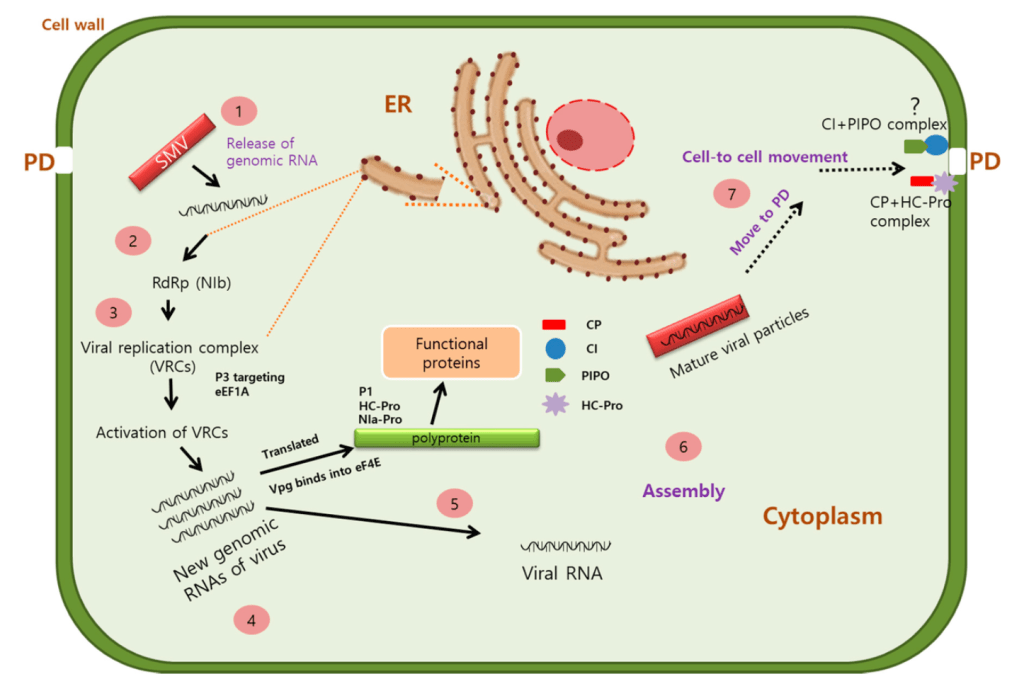
The life cycle of sweet potato feathery mottle virus is comparable to that of other known viruses. Once the virus has entered the cell the virus will begin to break down its capsid in order to release RNA into the cytoplasm. This is where the RNA is translated into a replication complex by the host cell. This complex helps synthesis viral RNA. The infected cell now releases this viral RNA and the process begins to repeat within the host. Unfortunately, the virus does not get passed on through the seeds of the plant. This means transmission is dependent on the aid of the aphids. Which makes eradication of the virus next to impossible. But it is able to be controlled through various techniques. Trying to limit the amount of aphids. This can be done by growing other plants that do not attract these bugs. Growing sweet potatoes in a stress free environment and limiting the amount of growing stress on the vegetables will help.

Now i know what you are thinking. Can this affect me if i accidentally consume infected sweet potatoes. Fortantley, unless you grow them at home you shouldn’t run into infected potatoes. Thanksgiving is safe, well unless you don’t cook things properly. But we’ll save those issues for after the post meal nap.
 Layman's Science
Leave a comment