In the world of genetics there has only been four letters of code, A, G, T, and C. Over the last 40 years a fifth genetic code has been discovered in bacteriophage. Cyanophage S-2L is a bacteriophage first discovered that replaced the A of its DNA with 2-aminoadenine also known as “Z”. This discovery left some unanswered questions. How are these Z-genome inserted into the DNA? Why have these bacteriophages developed this new code?
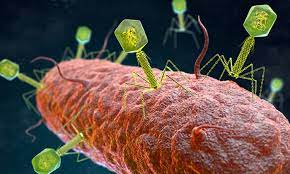
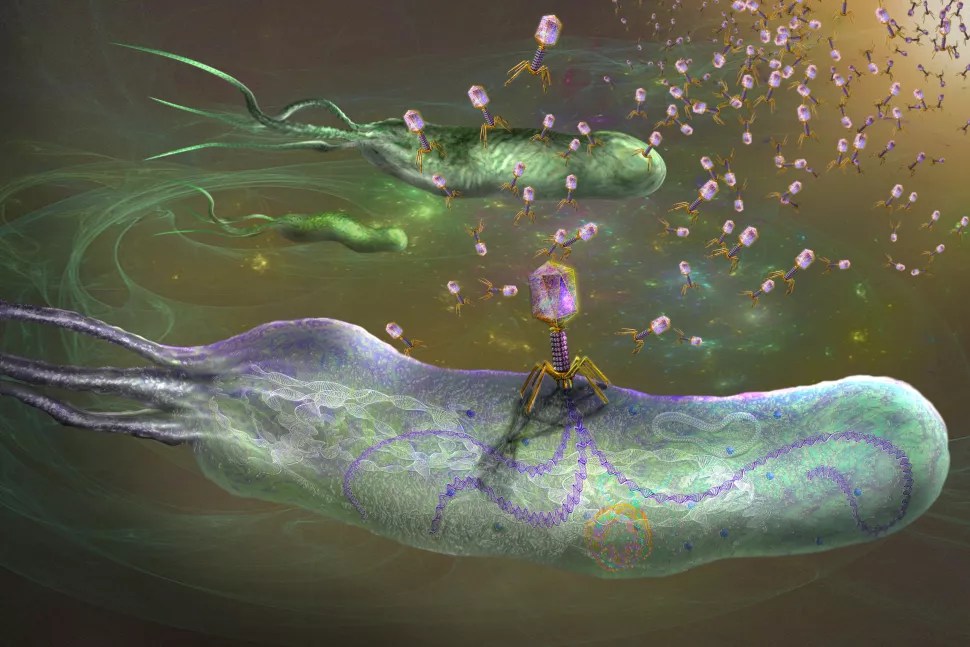
Let’s start with bacteriophage, also known as a bacterial virus. These phages attach themselves to the outside of bacteria. Once attached, they insert their DNA in the bacteria which destroys them from the inside out. As you can imagine bacteria are not a fan of these phage and will try and defend themselves from being destroyed. Combating this defense is one hypothesis for the new Z-genome within the phage. This now gives the bacteriophage a unique code that the bacteria are unable to fight off.
But it is still unclear on how these bacteriophages can insert their modified DNA into the host DNA. It is thought that an enzyme destroys the A terminal and changes it towards the Z-genome.

This discovery of Z-genomes could also be the proof of life on other planets. These unique bacteriophages have been discovered on meteorites. Which shows some sort of bacterial life in space.
But how could this be? What makes these bacteriophages strong enough to survive in space?
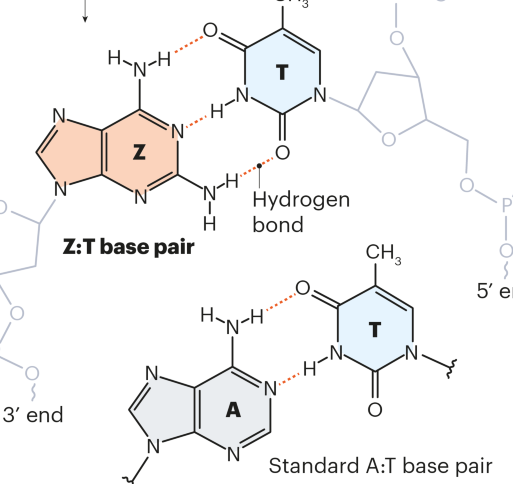
To answer that question, we need to look at how this mutated DNA strand binds. A standard DNA genome that follows the A, G,T,C genetic code is held together by 2 hydrogen bonds while this new Z-genome makes 3 hydrogen bonds while forming DNA. This extra bond increases the strength of the DNA strand which is believed to be helpful for surviving in harsh environments.
I think this could be the future directions viruses, bacteria, and antibiotic studies are headed. If we can modify DNA coding in a way that destroys viruses the next pandemic could be avoided.
But that’s not always fun, a part of me thinks this is the start of discovering life beyond our planet. What if this Z-genome is not modified DNA to prevent bacterial destruction but rather a unique DNA from an alien friend.
 Layman's Science
Leave a comment